

Early Spay and Neuter in Kittens: What the Science Actually Shows
“The optimal age for neutering, traditionally deemed to be between

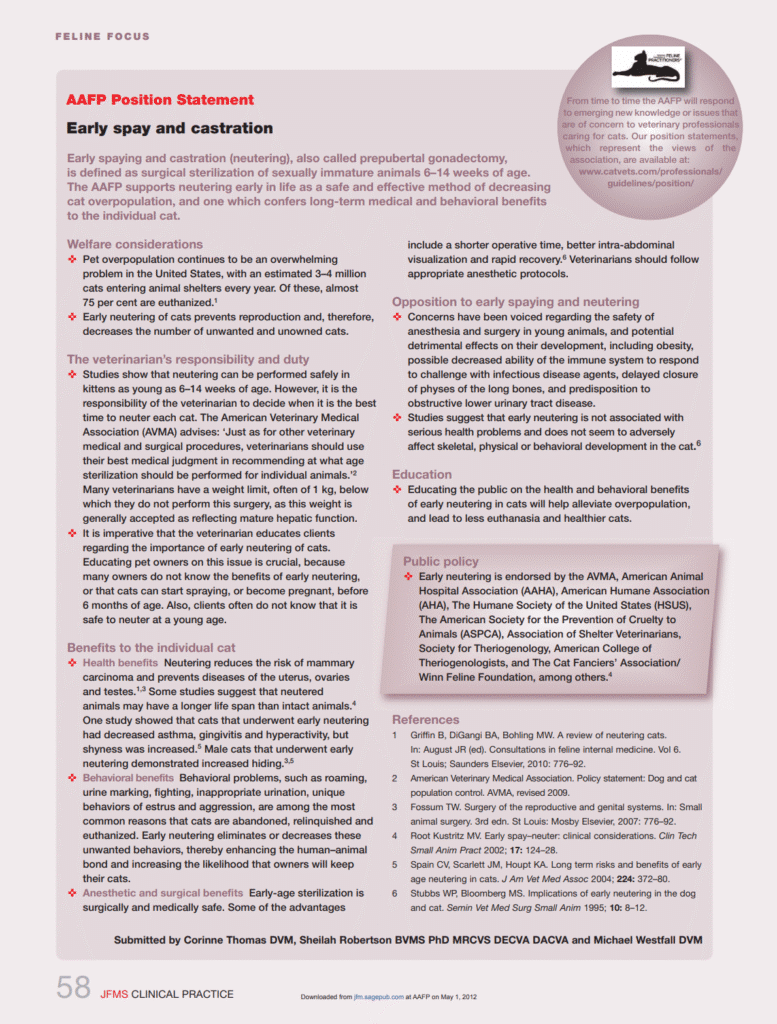
“The optimal age for neutering, traditionally deemed to be between 5 and 8 months, is now questioned, as short- and longer-term studies demonstrate no significant behavioural and physical advantages conferred by traditional-age neutering. Furthermore, a number of safe anaesthetic and surgical protocols have been documented that produce lower morbidity and similar mortality rates in early-age neuters compared with traditional-age neuters.”
— Joyce & Yates, 2011
Early spay and neuter (ESN) is a topic that comes up often in the feline world and can spark a lot of strong opinions. Many concerns focus on things like altered growth, joint problems, or long-term health effects in kittens.
These worries are completely understandable. However, much of the concern surrounding early spay and neuter originates from studies conducted in dogs.
In cats, early spay and neuter has been well studied in peer-reviewed veterinary research. The evidence consistently shows that ESN, when performed by an experienced veterinarian, is a safe practice and does not carry the same risks that are sometimes seen or discussed in canine studies.
This article aims to share and summarize feline-specific research to help clear up common misconceptions and offer reassurance to pet owners, breeders, rescues, and shelters. By focusing on data specific to cats, we hope to provide a clear, evidence-based look at the safety and benefits of early spay and neuter in kittens.
Early spay and neuter (ESN) refers to the sterilization of kittens before sexual maturity, most commonly between 8 and 16 weeks of age. While this may sound young to some, ESN has been safely performed in cats for decades, particularly in shelters, rescues, and responsible breeding programs.
It is important to note that ESN does not mean operating on kittens that are unhealthy or unfit for surgery. Kittens must meet appropriate health and weight requirements, and the procedure is performed under general anesthesia using pediatric protocols by veterinarians experienced in treating young patients. Not every veterinarian performs early spay and neuter, and those without experience in pediatric protocols may understandably advise against it. In many cases, concerns stem from studies conducted in dogs, which do not directly translate to cats.
In cats, recovery from ESN is typically very fast. Most kittens return to normal activity within hours. In our own litters, spay and neuter day is often followed by kittens running, playing, and acting completely like themselves almost as soon as we arrive home.
When performed properly by an experienced veterinarian, early spay and neuter is a safe and well-established practice in cats.

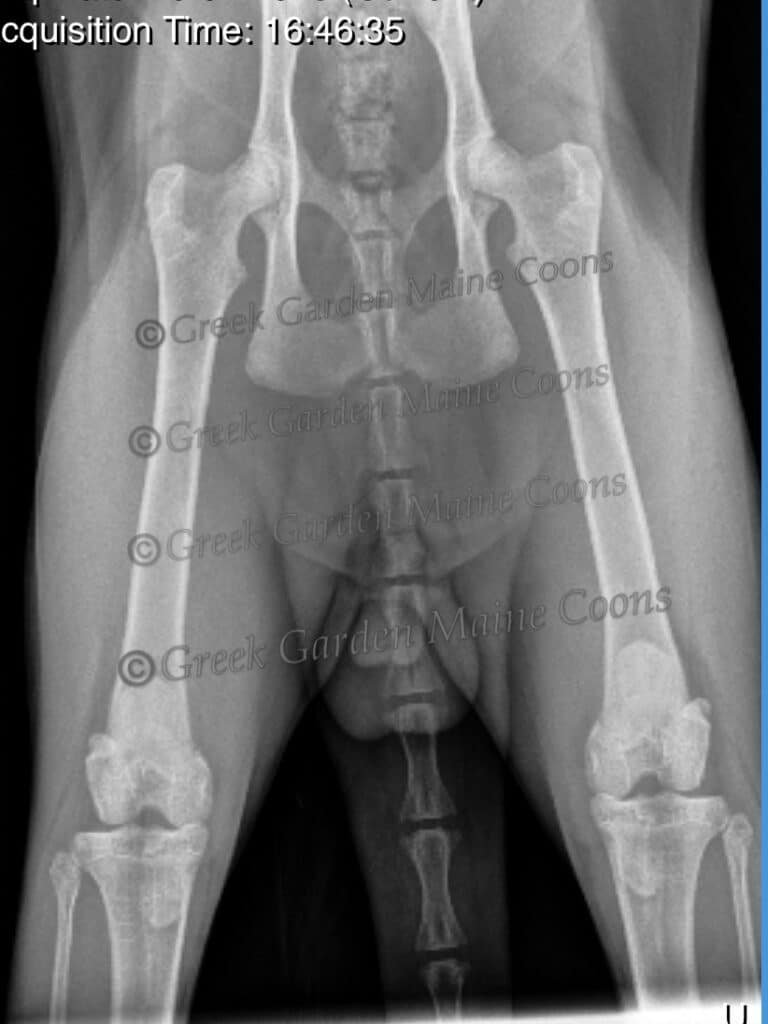
Delayed physeal (growth plate) closure is often cited in online discussions as evidence that early spay and neuter must therefore be harmful to skeletal development or joint health. This claim is frequently used to explain the development of hip dysplasia or orthopedic disease in offspring, particularly in lines where comprehensive hip screening has not been performed appropriately.
While delayed physeal closure has been observed, feline-specific research has not shown this finding to have clinical significance. As summarized in Help Stop Teenage Pregnancy! Early-Age Neutering in Cats:
“Prepubertal gonadectomy has been associated with delayed physeal closure of long bones. Distal radial physeal closure occurred approximately 8 weeks later for cats neutered at 7 weeks and 7 months compared with intact cats, although this was not found to affect adult size. No clinical relevance of delayed physeal closure has been demonstrated.”
— Joyce & Yates, 2011
This quote is in reference to one of the largest long-term studies evaluating ESN, which followed 1,660 cats and found no association between spay or neuter performed before 5.5 months of age and no increased rates of death, relinquishment, or the occurrence of serious medical or behavioral conditions. Delayed physeal closure is a physiological observation, not a diagnosis. It does not equate to joint disease, hip dysplasia, or degenerative orthopedic conditions, and should not be conflated with structural pathology in the absence of demonstrated clinical consequences.
Hip dysplasia itself is a multifactorial condition, influenced by genetics, joint conformation, growth rate, body condition, nutrition, and selective breeding practices. When objective health testing such as hip radiographs and formal grading is not performed on breeding cats, the underlying contributors to orthopedic disease may go unidentified. In these cases, the age at spay or neuter is sometimes blamed despite a lack of evidence supporting a causal relationship.
It is also important to note that hip dysplasia is not unique to Maine Coons. It has been documented in all domestic cat populations, including mixed-breed cats. Larger breeds are discussed more frequently largely because they are more often screened, creating the appearance of increased prevalence due to detection bias rather than breed-specific causation.
(Why dog studies don’t apply to cats)
Concerns about early spay and neuter often center on fears of stunted growth, orthopedic disease, urinary obstruction, anesthetic risk, or long-term behavioral and health problems. These concerns are understandable and frequently repeated; however, when we look specifically at feline-focused scientific literature, they are not supported by evidence.
A major reason early spay and neuter remains controversial is that many of the commonly cited risks originate from studies conducted in dogs. Dogs and cats differ significantly in skeletal development, hormone influence, and the timing of growth plate closure. Veterinary reviews emphasize that conclusions drawn from canine research cannot be directly applied to cats.
In contrast, feline-specific research has examined early spay and neuter extensively. Multiple peer-reviewed studies, including long-term follow-ups, have found no increased risk of abnormal growth, orthopedic disease, urinary tract obstruction, or adverse health outcomes in cats sterilized at an early age compared to those altered later in life. Physical development, adult body size, and overall health outcomes were found to be comparable regardless of the age at which spay or neuter was performed.
Behavioral outcomes have also been evaluated in feline-specific studies. Controlled research comparing kittens neutered as early as seven weeks of age to those neutered at more traditional ages found no negative behavioral effects associated with early spay and neuter. In some cases, early-altered cats demonstrated equal or improved behavioral outcomes, including reduced aggression and fewer undesirable behaviors such as fighting, spraying, or marking.
A review published in the Journal of Feline Medicine and Surgery summarizes this body of evidence clearly:
“The optimal age for neutering, traditionally deemed to be between 5 and 8 months, is now questioned, as short- and longer-term studies demonstrate no significant behavioural and physical advantages conferred by traditional-age neutering. Furthermore, a number of safe anaesthetic and surgical protocols have been documented that produce lower morbidity and similar mortality rates in early-age neuters compared with traditional-age neuters.”
— Joyce & Yates, 2011
Additional veterinary literature further reinforces that this clarity applies specifically to cats, while ongoing uncertainty largely applies to certain dog breeds:
“Determining the optimal age to perform elective gonadectomy is much clearer in cats, and the literature demonstrates that the procedures can typically be safely performed at any age after 6–8 weeks of age.”
— Stein et al., 2014
Importantly, across decades of published feline-specific research, there is no high-quality evidence demonstrating that early spay and neuter causes the long-term harms it is often accused of online or anecdotally. When concerns are raised, they are most often based on extrapolation from canine data or personal experience rather than conclusions drawn from controlled studies in cats.
For this reason, decisions regarding early spay and neuter in cats should be guided by feline-specific research and veterinary expertise, rather than assumptions based on other species.
Spaying cats prior to sexual maturity is associated with a dramatic reduction in the risk of mammary carcinoma, with studies showing up to a 91% decrease in risk when cats are spayed before six months of age. The protective effect declines as age at spay increases, making timing an important factor in long-term health outcomes.
In addition, spaying completely eliminates the risk of pyometra, a potentially life-threatening uterine infection that occurs only in intact female cats and often requires emergency surgical intervention.
Beyond these medical benefits, early spay and neuter offers several practical advantages related to behavior, welfare, and population management.
Key documented benefits of early spay and neuter in cats include:
Substantially reduced risk of mammary carcinoma when spayed prior to sexual maturity
Complete elimination of pyometra risk
Prevention of accidental litters, removing reliance on owner compliance
Reduction and often elimination of hormone-driven behaviors, including spraying, roaming, fighting, and marking
Rapid recovery times when appropriate pediatric surgical protocols are used
Support for responsible population management and reduced shelter intake
Taken together, these benefits show that early spay and neuter is not only a safe option for cats, but a proactive approach that supports long-term health, behavioral stability, and overall welfare.
Early spay and neuter is not a fringe practice. It is supported by multiple respected veterinary and animal welfare organizations based on decades of feline-specific research and clinical experience.
Organizations that recognize early spay and neuter as a safe and appropriate option for cats include, but are not limited to:
American Association of Feline Practitioners (AAFP) — Supports pediatric spay and neuter in cats when appropriate protocols are used
American Veterinary Medical Association (AVMA) — Recognizes early-age spay and neuter as an accepted veterinary practice
Association of Shelter Veterinarians (ASV) — Endorses early-age sterilization to improve welfare and reduce shelter intake
National Kitten Coalition (NKC) — Actively promotes spay/neuter by five months of age (“Feline Fix by Five”)
ASPCA — Supports early-age spay and neuter as part of responsible population management
Humane Society of the United States (HSUS) — Endorses pediatric spay and neuter in cats
International Society of Feline Medicine (ISFM) — Recognizes early spay and neuter as safe in cats when performed by experienced veterinarians
Royal College of Veterinary Surgeons (RCVS) — Acknowledges pediatric neutering as an accepted practice within the UK
British Small Animal Veterinary Association (BSAVA) — Provides guidance on early-age neutering in cats
European Advisory Board on Cat Diseases (ABCD) — Supports feline-specific, evidence-based reproductive management
Australian Veterinary Association (AVA) — Recognizes early-age spay and neuter as appropriate in cats
Royal Society for the Prevention of Cruelty to Animals (RSPCA Australia & New Zealand) — Actively supports and performs pediatric spay and neuter
Shelter and rescue veterinary programs throughout Australasia, where ESN is routine practice
World Small Animal Veterinary Association (WSAVA) — Supports evidence-based reproductive control in companion animals, including pediatric sterilization
International shelter medicine programs and veterinary schools, where early spay and neuter has been performed safely for decades
Humane organizations worldwide, particularly in high-volume spay/neuter and shelter settings, where early-age sterilization is standard practice
Howe LM, Slater MR, Boothe HW, et al. Long-term outcome of gonadectomy performed at an early age or traditional age in cats. J Am Vet Med Assoc. 2000.
Spain CV, Scarlett JM, Houpt KA. Long-term risks and benefits of early-age gonadectomy in cats. J Am Vet Med Assoc. 2004.
Stubbs WP, Bloomberg MS, Scruggs SL, Shille VM, Lane TJ. Effects of prepubertal gonadectomy on physical and behavioral development in cats. J Am Vet Med Assoc. 1996;209(11):1864-1871.
“The optimal age for neutering, traditionally deemed to be between

There’s nothing quite like the ever-present “genetics expert” in the
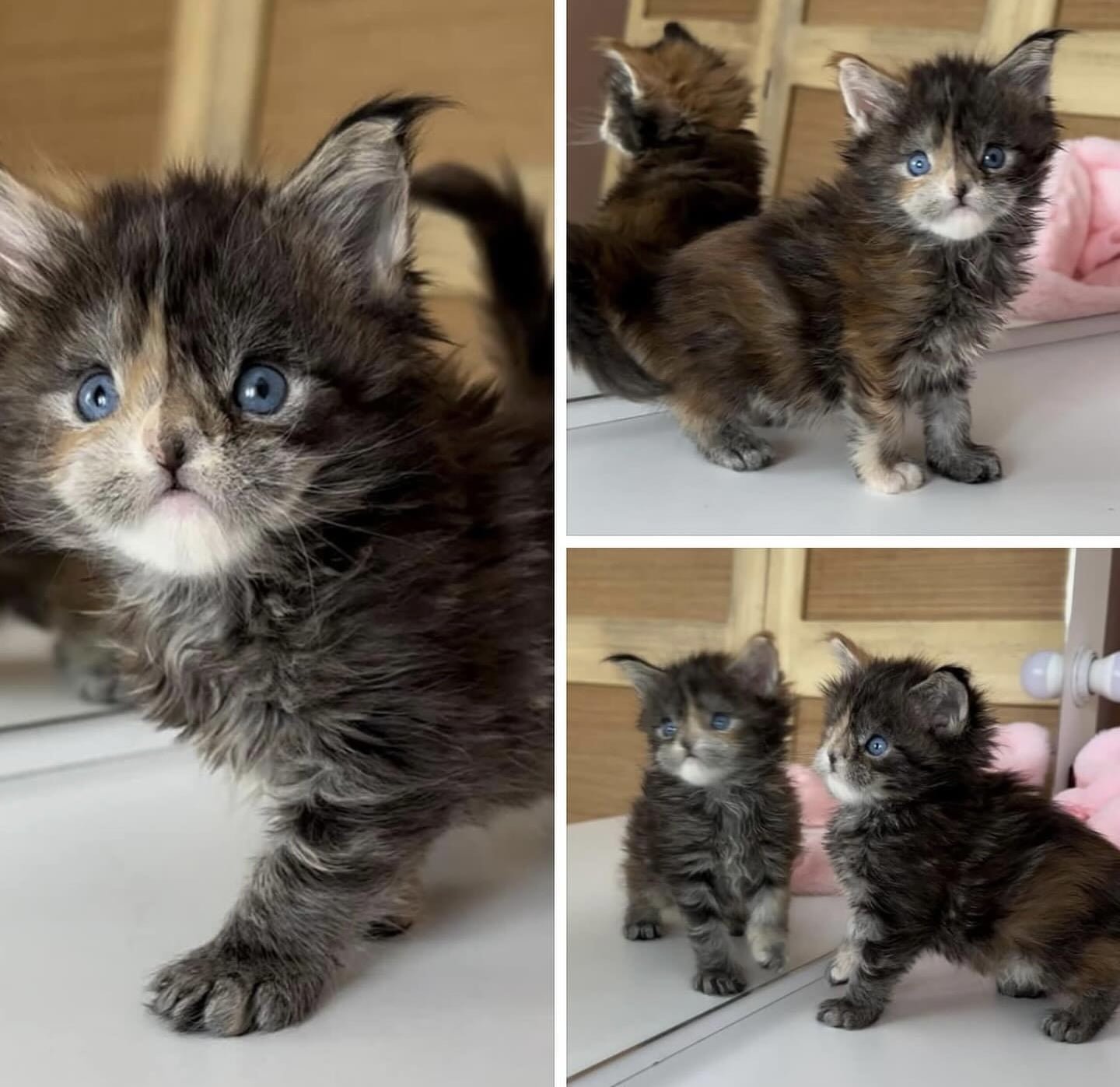
Obvious Waardenburg Syndrome-like traits in a Blue-Eyed Maine Coon Kitten